ACADEMY
Learning that changes something in practice
The Almuruna Academy rarely starts with the question of which training we can offer. We prefer to start from what people, leaders or teams need to become stronger at in order to do their work better and move the organisation forward.
From that question we design a learning experience that fits the organisation, the participants and the context in which they work.
From practice
What organisations want to strengthen
- Managers who are new in their role and looking for footing in difficult conversations
- A training that was well received but changed little in practice
- Teams that want to learn to deal better with tension, feedback and difference
- An organisation that wants its own learning programme, tailored to its context
HOW WE LOOK AT LEARNING
We have many trainings, but we do not sell a catalogue
Over the years we have built up a broad training library and developed a great many learning programmes. That experience gives us a solid foundation, but does not determine in advance what a new assignment should look like.
Most of the programmes we run are tailor-made. We start with what the organisation wants to achieve, what people find difficult today and what they should be able to do more strongly themselves afterwards.
Sometimes we can build on existing content. Sometimes we combine different areas of expertise. And sometimes we build something new around a question we have not come across in that way before.
The learning question shapes the programme, not our catalogue
We design most of our learning programmes around an organisation’s context. At selected times, we also organise open programmes that people can register for individually.
FROM INSIGHT TO PRACTICE
Understanding something is not yet the same as being able to do it
People can know perfectly well how feedback works and still keep postponing a difficult conversation. A manager can know various models and still get stuck when interests clash or resistance arises.
That is why we pay a lot of attention to the step between insight and action.
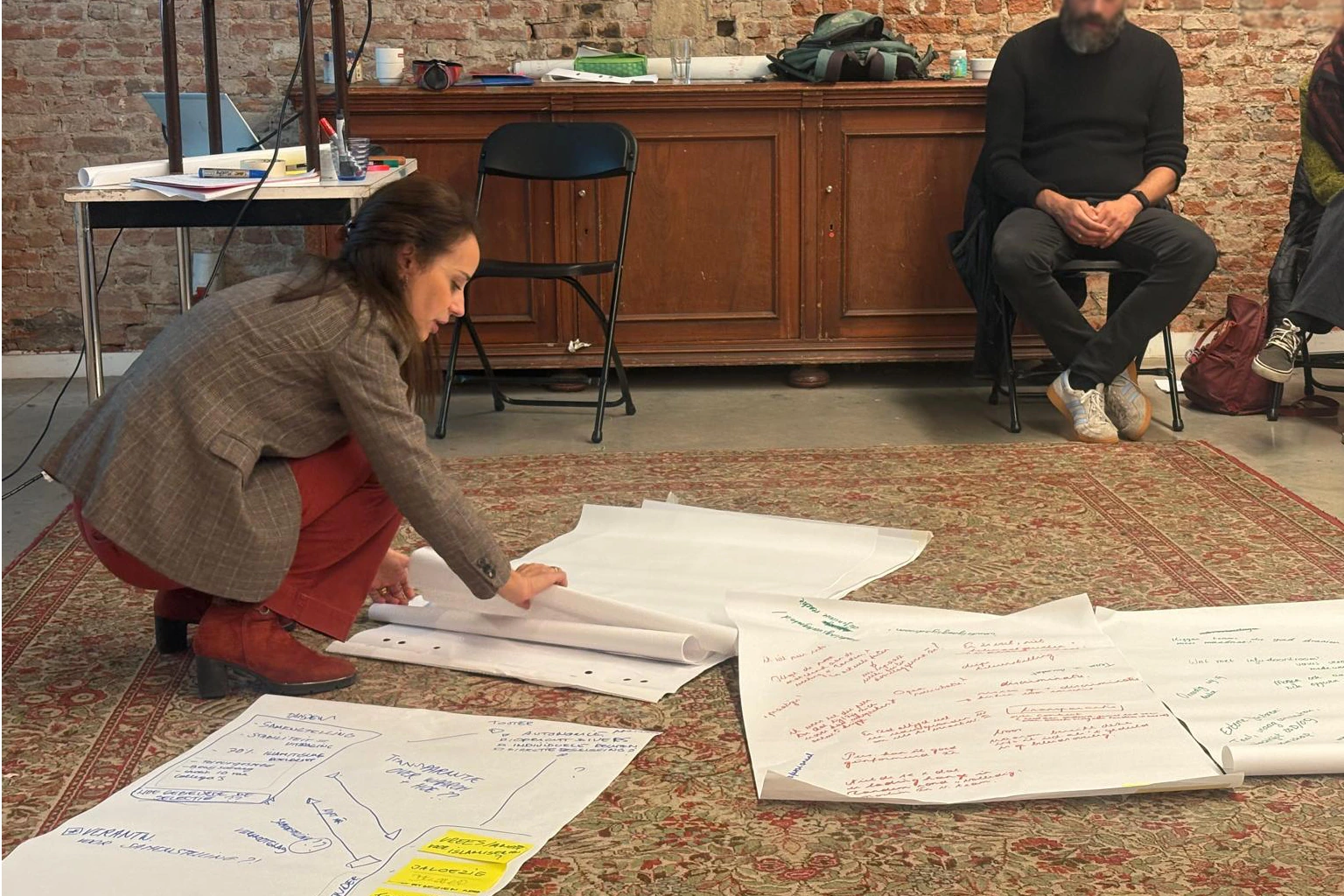
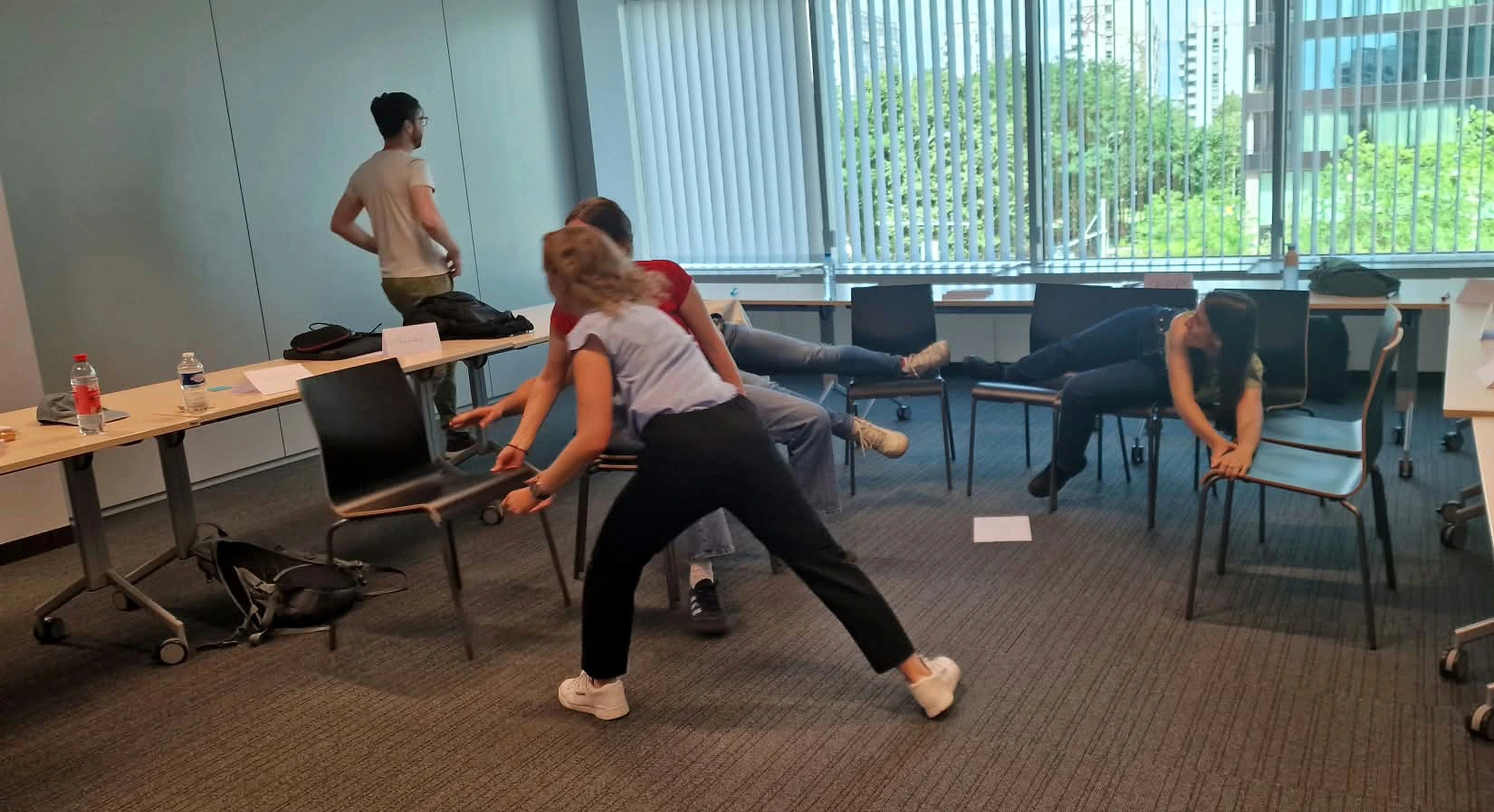
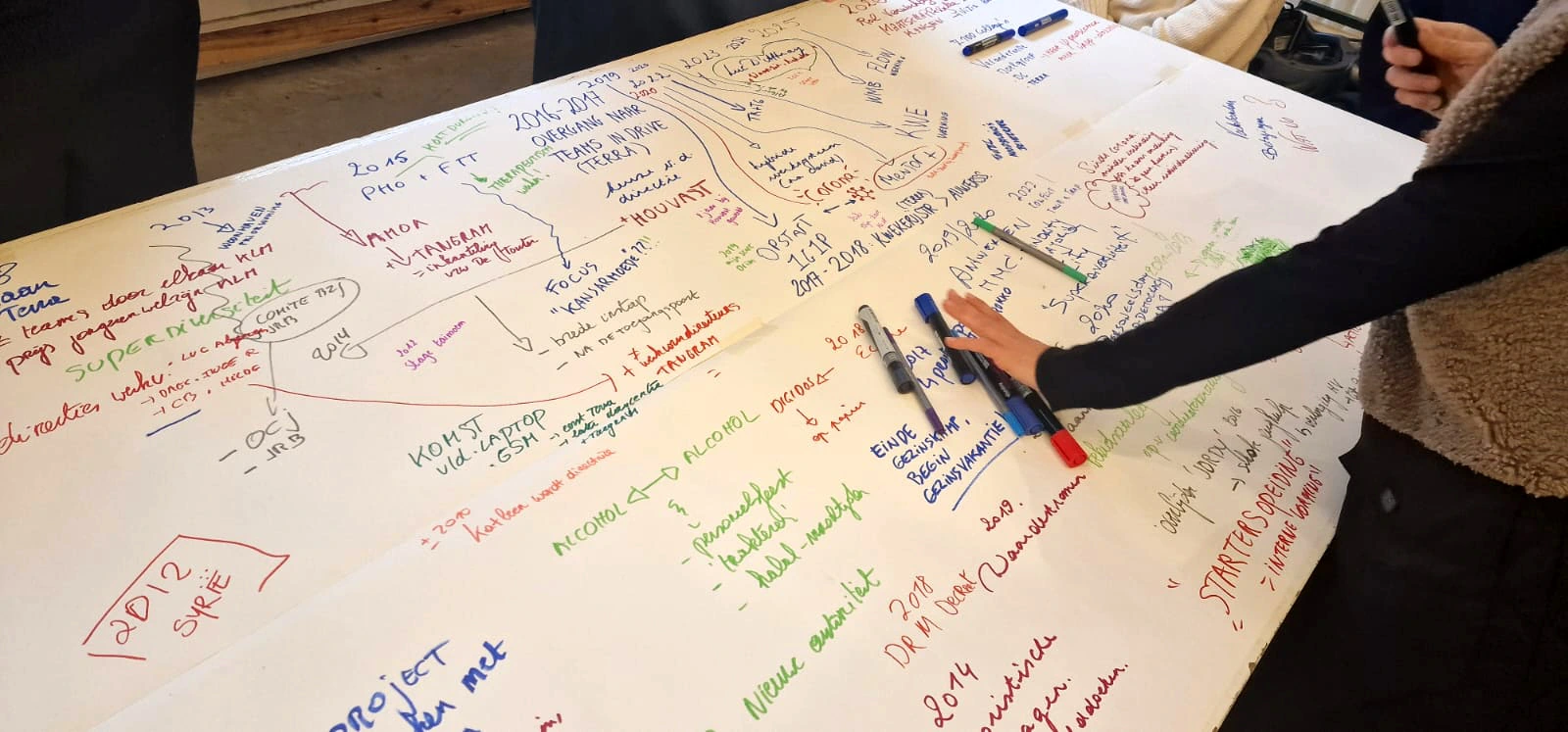
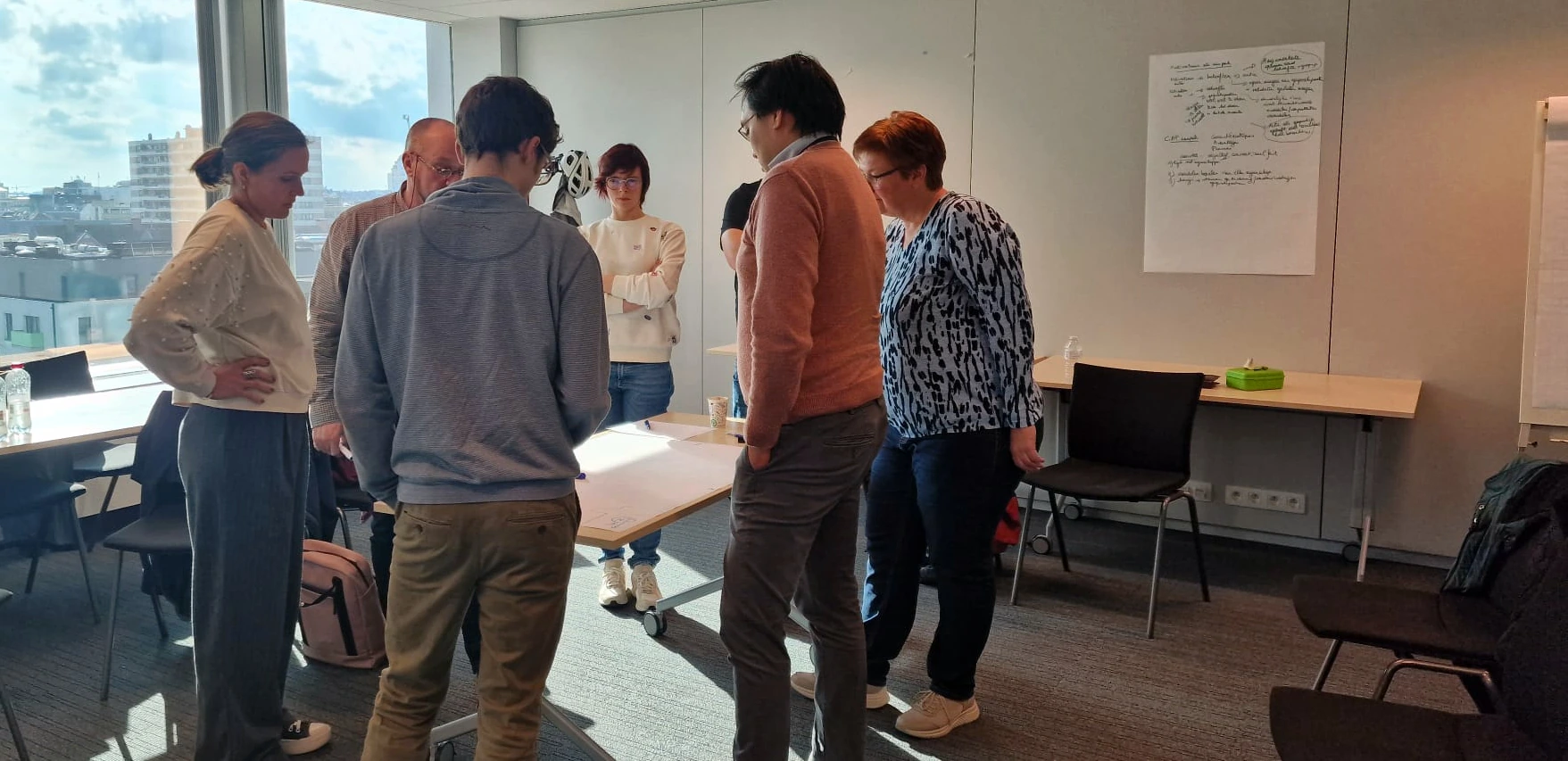
We combine substantive frameworks with reflection, exercises, conversations and situations from participants' everyday practice. Where it helps, we work with professional actors so that people can genuinely practise difficult conversations, resistance, conflict or negotiations.
The working environment is deliberately brought into the training. We use recognisable situations and real questions, so that participants not only understand what could be done differently, but also experience how to do it in their own context.
OUR EXPERTISE
Expertise to build on
Over the years we have developed trainings and programmes around very diverse questions. Some of them we have been running for years, others grew out of a specific organisation or context.
This overview gives a picture of the expertise we can build on.
It is not a fixed menu. Which themes we combine, deepen or adapt depends on what people need to be able to do more strongly in their own practice.
Leadership begins with how you deal with people, not with models. We work with managers on resilient and inclusive leadership, coaching leadership and leading across departments. The focus is on what they need to be able to do differently in their own context, not on theory alone.
- Resilient and inclusive leadership
- Coaching leadership
- Cross-functional management
- Leadership development
Good communication is not a technique but a way of connecting. We train connecting communication based on Nonviolent Communication, effective communication and holding feedback and difficult conversations, with attention to intercultural differences.
- Connecting communication / Nonviolent Communication (NVC)
- Effective communication
- Feedback and difficult conversations
- Intercultural communication
Speaking to a group takes more than a good structure. We guide people in public speaking, presenting with impact and storytelling, and help those who experience fear of speaking to appear more confident.
- Public speaking
- Presenting with impact
- Storytelling
- Speaking with confidence and handling fear of speaking
Standing strong in your work begins with knowing yourself and daring to set boundaries. We work on assertiveness, self-confidence, emotion management and resilience, so that people keep acting professionally under pressure too.
- Assertiveness and setting boundaries
- Self-confidence and professional impact
- Emotion management
- Resilience
Negotiating and dealing with conflict call for preparation, insight into interests and nerve. We train sustainable negotiation, social dialogue and complex stakeholder negotiations, and guide mediation and conflict management.
- Sustainable negotiation
- Social dialogue
- Complex stakeholder negotiations
- Mediation and conflict management
Teams work better when all voices are heard, including that of the minority. With Deep Democracy, psychological safety and inclusive decision-making, we make collaboration and team dynamics discussable and improvable.
- Deep Democracy
- Psychological safety
- Collaboration and team dynamics
- Inclusive decision-making
Inclusion is not a project but a way of leading and working together. We work on inclusive leadership, biases and stereotypes, intercultural collaboration and the prevention of discrimination and exclusion.
- Inclusive leadership
- Biases and stereotypes
- Intercultural collaboration
- Preventing discrimination and exclusion
Lasting learning capacity is built within the organisation itself. We guide group facilitation and train-the-trainer programmes that help internal trainers grow and keep expertise in-house.
- Train-the-trainer
- Group facilitation
- Developing internal trainers
- Building internal expertise
We also build programmes around critical thinking, solution-focused working, creativity, professional networking and other questions of professional effectiveness, among others.
AI literacy, too, is broader than learning to prompt. It is about understanding possibilities and limitations, checking output critically, handling data carefully and knowing when human judgement is needed. For managers, it also includes how they can guide responsible use in their team.
Methods as tools
Our programmes combine years of practical experience with well-founded methods.
Within Almuruna there is in-depth expertise in, among other things, Deep Democracy, Nonviolent Communication, coaching, mediation and various models of leadership, group dynamics and intercultural collaboration.
We do not use these methods because one model would be the answer to every situation.
They give us different ways of looking, understanding and letting people practise. Which approach we use depends on the question, the participants and the environment in which they will need to act afterwards.
TAILOR-MADE
Built around your organisation
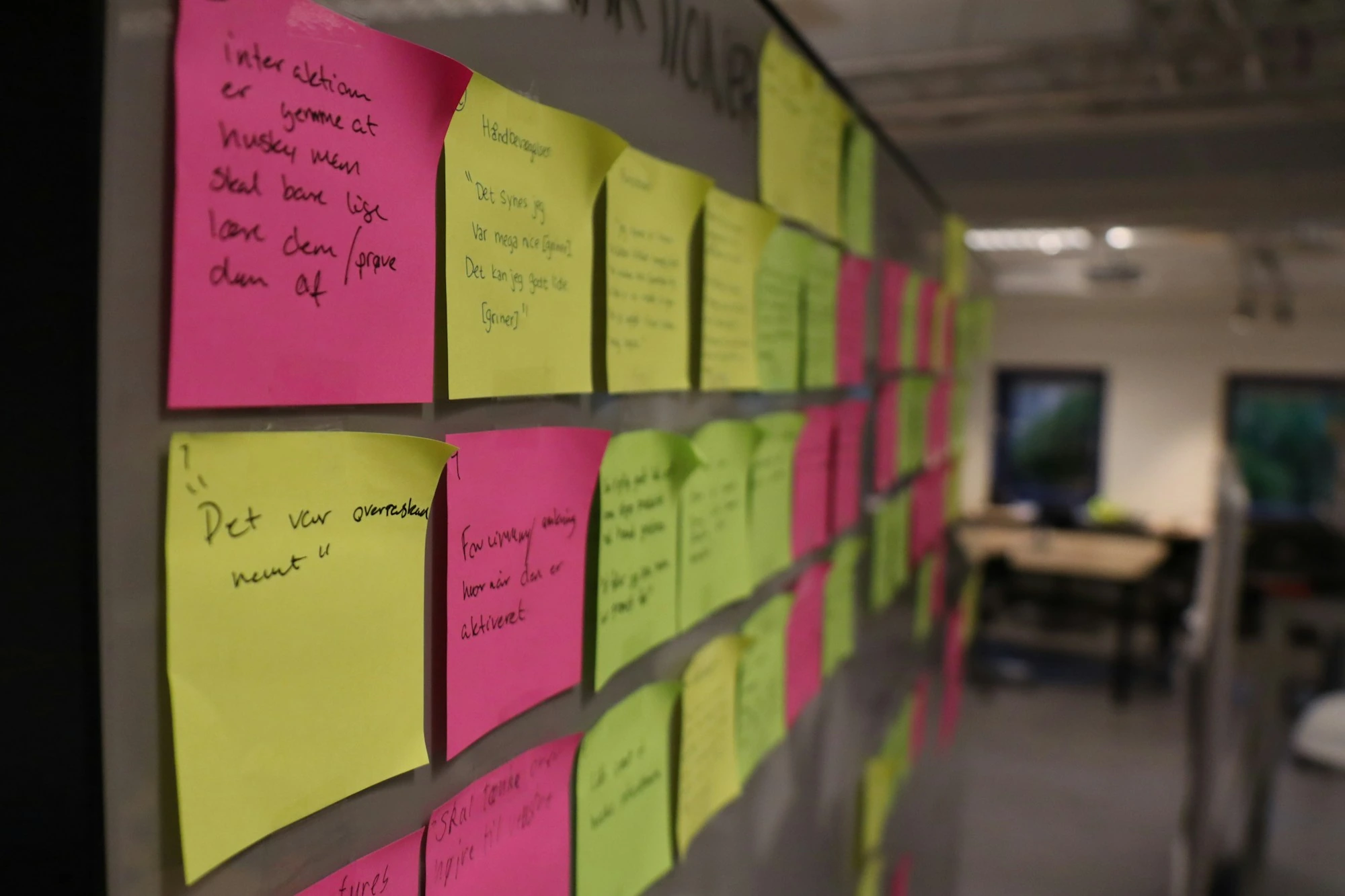
We look at what this group needs, which context plays a part and which combination of content, practice and guidance can make the most difference.
Sometimes an existing training is almost entirely usable. In other situations we combine different themes or build new content around a concrete challenge.
The learning programme is built around what is needed.
FROM EVERYDAY PRACTICE TO COMPLEX CONTEXTS
Learning in your context
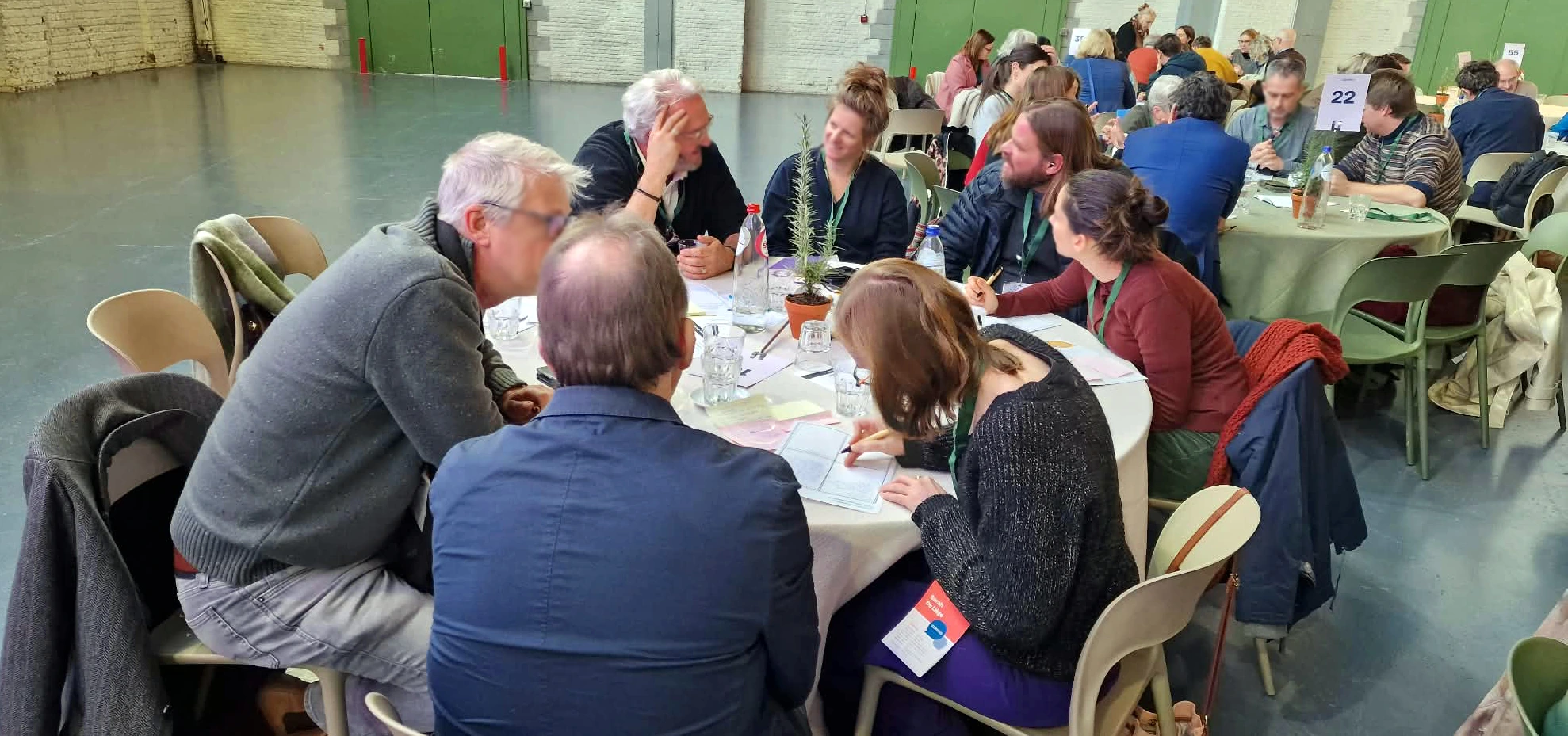
Some programmes deal with situations that occur every day at work. A feedback conversation. A team that struggles to work together. A manager who needs to bring more clarity.
Other assignments take place in an environment where interests, mandate and results are under much greater pressure.
Najima, for example, trained negotiators in preparation for the Belgian Presidency of the European Union and diplomats for their next foreign posting. The same expertise is also used in negotiations between social partners and other complex professional contexts.
Our trainings and learning programmes have also taken us to organisations in Belgium, the Netherlands, Luxembourg, France, Switzerland, Italy, Spain and Morocco, among others.
Above all, that experience has taught us how important context is. Language, organisational culture, sector, local customs and the role participants take on all shape how people learn and which approach works.
That is why we do not simply transfer a training that works well in one environment to another.
The right people around the learning question
Almuruna works with a network of trainers, facilitators and experts who each bring their own experience and expertise. This allows us to put together the right combination around a concrete question.
When practice is central, we can also bring in professional actors. They make it possible to explore difficult conversations, resistance, conflicts or negotiations safely but realistically, and to try again.
At the same time, we pay a lot of attention to the environment in which people learn.
We build safe spaces in which participants feel enough trust to ask questions, make mistakes and share experiences. But we also create brave spaces in which difference, tension and difficult subjects are not avoided.
Learning takes trust, and sometimes it takes courage too
WHAT MUST LAST
The strongest learning experience lives on after we have left
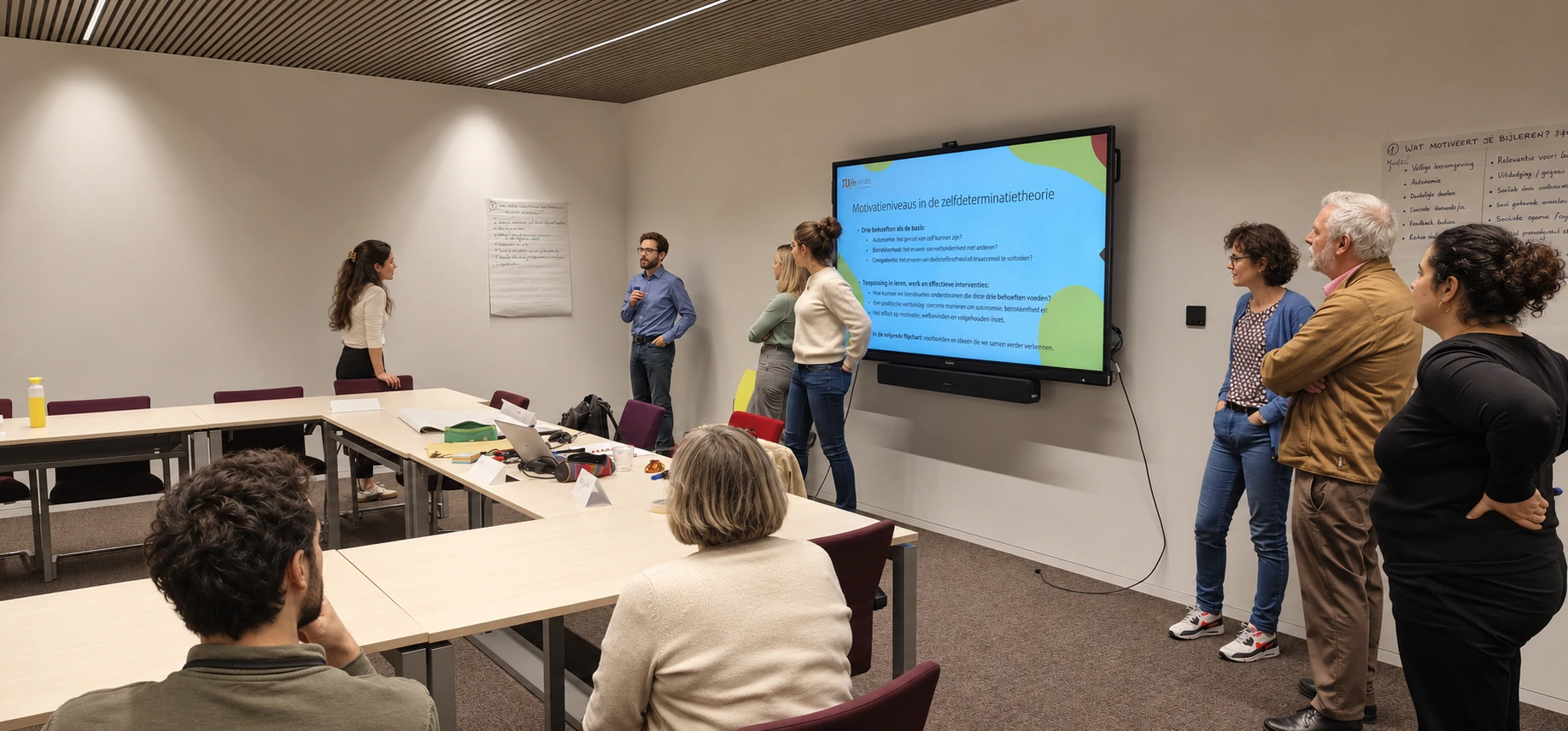
In a programme we also look at what happens after the training: whether managers can take it further in their teams, whether participants use the insights when the same situation comes back, and whether something is needed to build knowledge or skills more widely in the organisation.
Where relevant, we can work with follow-up modules, peer supervision, coaching or train-the-trainer programmes with which organisations further develop expertise and facilitation capacity themselves.
We want something to remain that people can use themselves afterwards.
After the training, application begins
Participants mainly tell us what they have come to see, understand or do differently. For us, that is more relevant than a satisfaction score.
“I can really use what I have learnt here. The content and the way it was delivered were engaging from beginning to end.”
DVZ
“Plenty of interaction, with practice linked to very sound theory.”
FOD Justitie
“It brought me surprising new insights and helped me explore different perspectives that I would not have considered before.”
Actiris
ONE ORGANISATION
When training is not the whole answer
Not every problem gets better with training. We say so too when a client comes to the Academy.
When managers have no clear mandate, leadership training is not automatically the solution. When a team gets stuck because responsibilities are unclear, we may first need to look at the organisation.
That is why, within Almuruna, the Academy stands alongside Leadership & People, Strategy & Organisation and Almuruna One.
Sometimes learning is exactly what is needed. Sometimes the greatest lever lies elsewhere.
What will your people need to be able to do better?
You do not need to have chosen a training yet.
Tell us what is happening today, what you would like to see differently and who is involved.
From there we can decide together what people need to learn, practise or develop to really make a difference.