
Strategy & Organisation
Not every human problem is a people problem
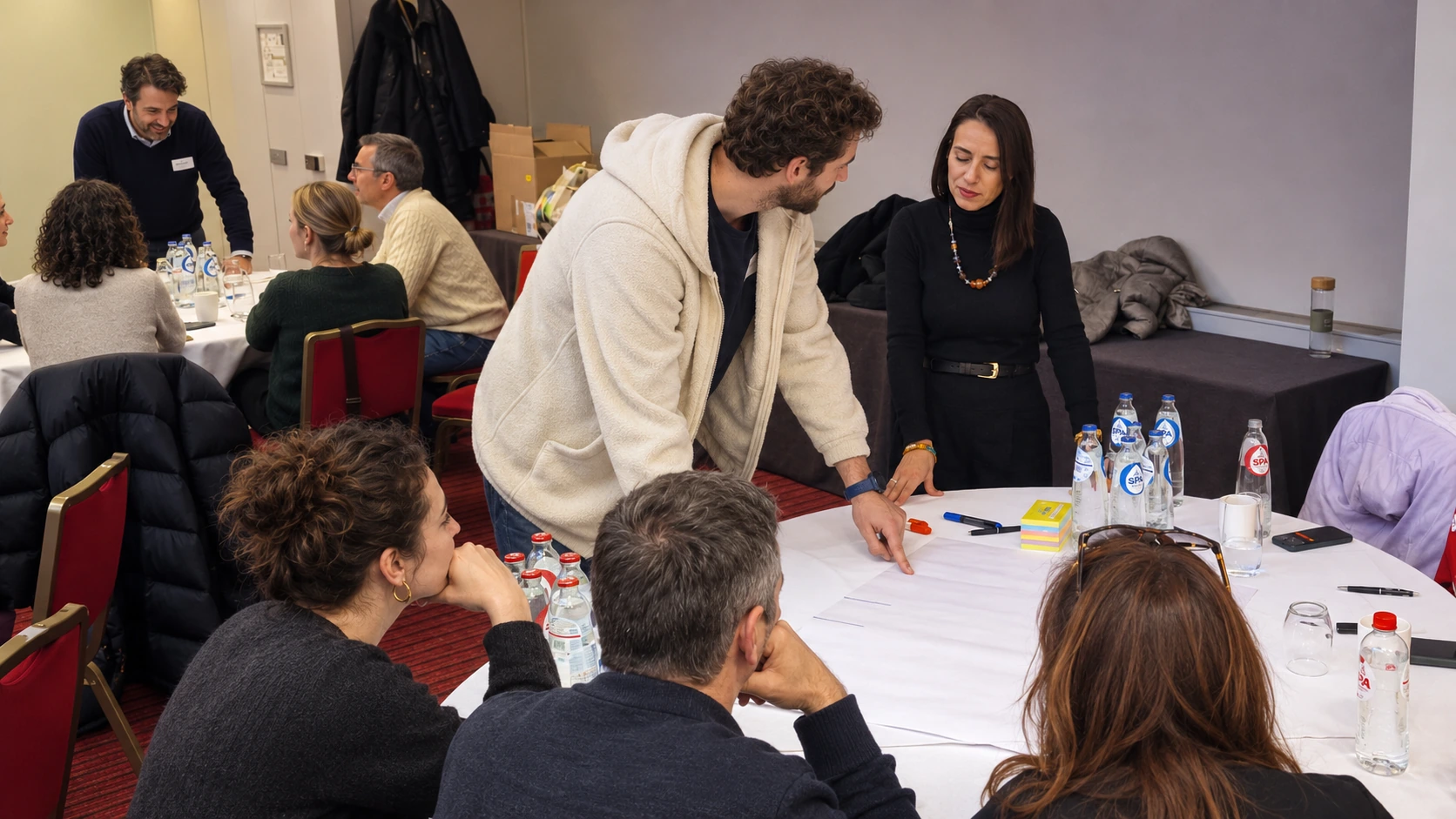
When the same behaviour keeps recurring in an organisation, it is worth looking not only at the people, but also at the system they work in.
When a manager takes too little ownership, a team struggles to work together or employees constantly escalate decisions upwards, an individual intervention seems the obvious response. We look to coaching, communication skills or leadership development. Sometimes that is exactly what is needed. But when the same behaviour keeps returning, it is wise to look at the system around those people too.
Organisations themselves produce some of the behaviour they then try to correct.
An organisation can ask employees to take more responsibility while requiring every relevant decision to be approved three levels higher up. It can put collaboration at the centre while holding departments accountable for conflicting objectives. And it can ask managers to trust others while leaving their own mandate unclear.
In those circumstances, behaviour is not just a personal choice. It is also a rational response to the environment someone works in.
That is why I do not see organisational design as a theoretical exercise with organisational charts. Every day, structure determines who can decide what, which information is available, where dependencies arise and how much coordination is needed to make relatively simple decisions. Governance, performance indicators and formal or informal power dynamics also influence how people behave.
Of course, that does not mean structure explains everything. Organisations remain human systems. Leadership, trust, skills and culture are just as real. But that is precisely why it is problematic to automatically single out one dimension as the cause.
When the same problem keeps occurring across different teams or with successive employees, I therefore like to ask a different question: what is it about this organisation that makes this behaviour logical?
That question can bring surprising answers. The employee who supposedly shows too little initiative may turn out to have been pulled up several times after making a decision independently. Two departments that constantly work against each other may have been given objectives that are almost impossible to achieve at the same time. And a manager who continues to make every decision themselves may be working within a governance framework that leaves it unclear which responsibilities they are actually allowed to delegate.
From that point on, the intervention changes too. There is little point in giving people yet more training in coping with the same structural frustration. It becomes more useful to change the conditions that keep making that behaviour likely.
That is why, for us, “not every human problem is a people problem” is more than a slogan. It is an invitation never to view behaviour as entirely separate from the organisation in which it arises.