
Leadership & People
Leadership becomes visible when things are not straightforward
Almuruna·
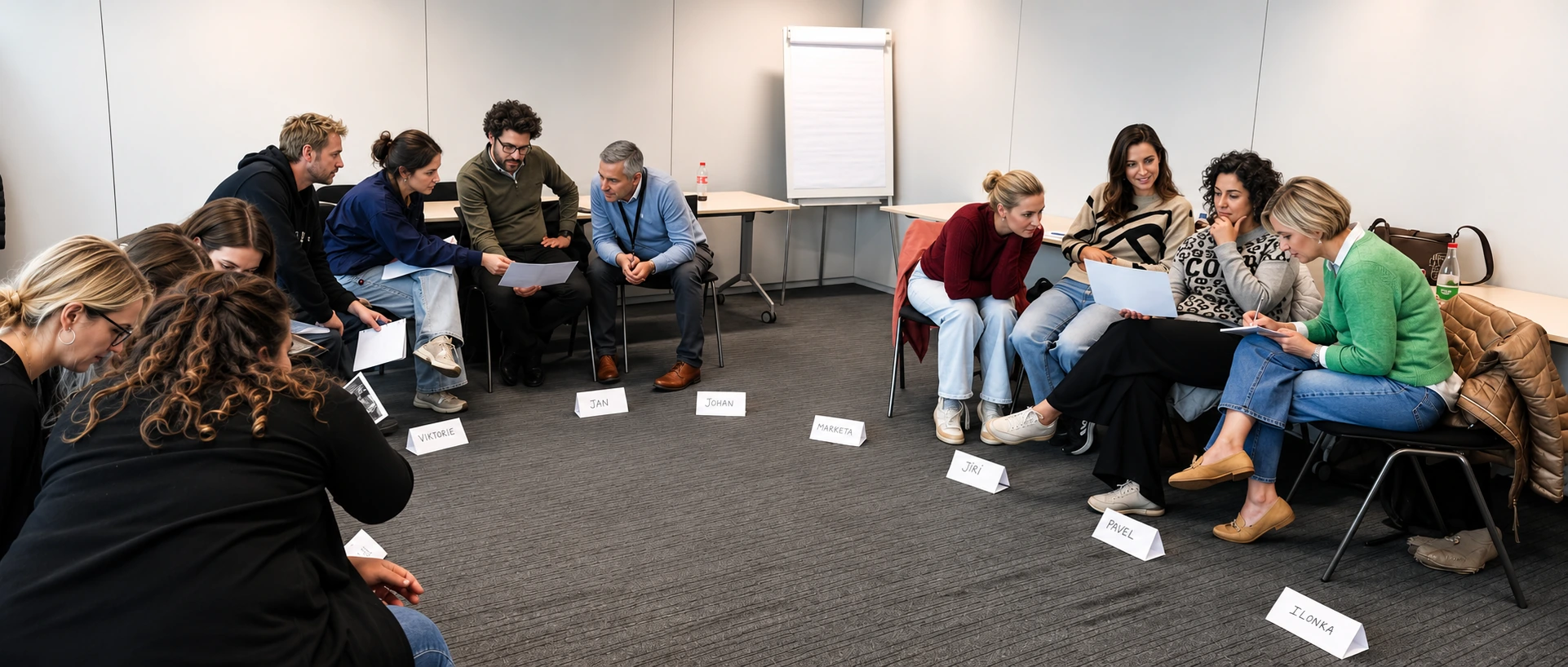
Leadership is rarely tested when everyone agrees. It becomes visible when direction, humanity and responsibility are needed at the same time.
Talking about leadership is relatively easy when everything is going well. The team is working well, results are strong, decisions are implemented without much discussion and people broadly know what is expected of them. At such times, many leadership styles seem to work.
Things become more interesting when interests clash, uncertainty grows or a decision is needed that will not benefit everyone. What leadership really demands also becomes clearer when someone performs exceptionally well but damages working relationships, or when an organisation needs to move faster than people feel comfortable with.
People-centred leadership is sometimes confused with striving for satisfaction or consensus. But that, too, can become a form of avoidance. People do not only need to be heard; they also need direction, clarity and boundaries.
A manager can genuinely understand how a decision affects someone and still decide that it is necessary. Those two realities do not have to exclude one another. This is precisely where an important distinction lies between people-centred leadership and leadership that mainly seeks to avoid discomfort.
The same applies the other way round. Focusing on results does not mean that the human consequences of decisions become irrelevant. A leader who focuses solely on output and pays too little attention to what is happening within a team may achieve short-term results while undermining that team’s ability to function sustainably.
The challenge, then, is not to choose between people and results. It lies in the ability to take both seriously at the same time. That means listening without reopening every decision, being clear without becoming unnecessarily harsh, and giving people responsibility without passing on the responsibility to lead.
Models can help put this into words, but leadership ultimately takes shape in real situations. In conversations for which there is no perfect script. In decisions where different interests are equally legitimate. And in moments when managers themselves do not have all the information either.
That is why, for us, leadership development does not begin with the question of which style someone should adopt. We prefer to look at what a situation asks of a leader, how someone instinctively responds under pressure and what effect that has on others.
Leadership is therefore less a collection of techniques than the ability to keep acting consciously when reality becomes complex. It is precisely in those moments that we see whether direction, humanity and responsibility can truly coexist.