
Academy
Public speaking is not about learning to speak without nerves
·Updated on
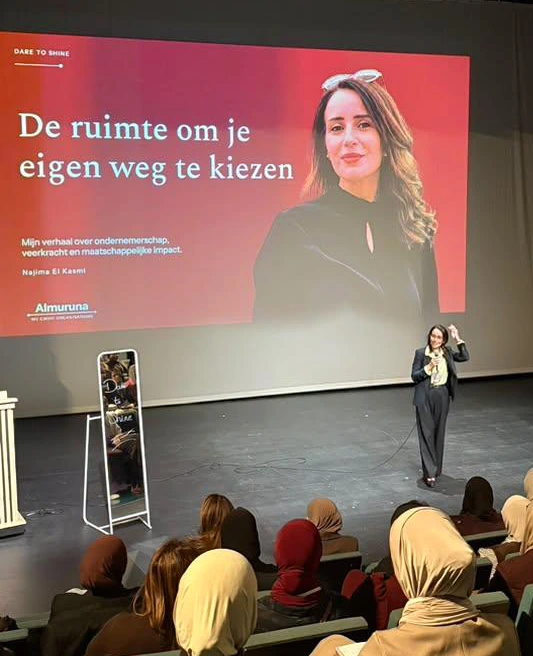
Speaking well in public does not mean no longer feeling nervous. It is about gaining confidence in your own abilities and conveying your message clearly, even when you feel tense.
Many people who take a public speaking course mainly want to feel less nervous. I understand that. As soon as you stand in front of a group, everything feels different. A silence suddenly seems much longer, words that came easily during preparation are slow to arrive, and all eyes are on you.
Tension is part of speaking in public. Even experienced speakers still feel it. What matters most is learning to deal with it, so that it does not get in the way of what you want to say.
People respond to tension in very different ways. Some start speaking faster; others speak more quietly, avoid eye contact or fill their slides with text for fear of forgetting something. Some also memorise their presentation almost word for word. That creates a sense of control, but as soon as an unexpected question comes up or someone loses their thread, that certainty can quickly disappear.
During my courses, we therefore pay attention to different aspects of public speaking. A clear structure provides a point of reference and helps you keep the thread of your story. We work on voice, speaking pace and body language, as well as storytelling to convey a message in a relatable and convincing way. We also practise handling questions from the audience and unexpected situations, so that participants learn to respond flexibly.
What strikes me time and again during these exercises is that participants often learn most when something does not go to plan. Someone forgets part of their story, briefly loses their thread or receives a question they cannot answer straight away. The first instinct is often to speak faster or fill the silence as quickly as possible.
Yet that is precisely where an important learning moment lies. It is fine to take a moment to think. A silence does not need to be filled immediately. And a small mistake does not mean the whole presentation has failed.
By experiencing this themselves, participants gain more confidence in their ability to handle unexpected situations.
A presentation can be well prepared in terms of content and technically well structured, yet still make little impression. The way you connect with your audience plays at least as important a role. Do you notice when people lose interest? Do you see when something raises questions? Do you dare to depart from your preparation when the situation calls for it?
That takes practice, attention and, above all, a willingness not to try to keep everything under control.
A strong speaker knows their story and what they want to convey, while leaving enough room to respond to their audience. That is what we work towards during our courses.