
Organisation & resilience
Slowing down can make an organisation faster
Almuruna·
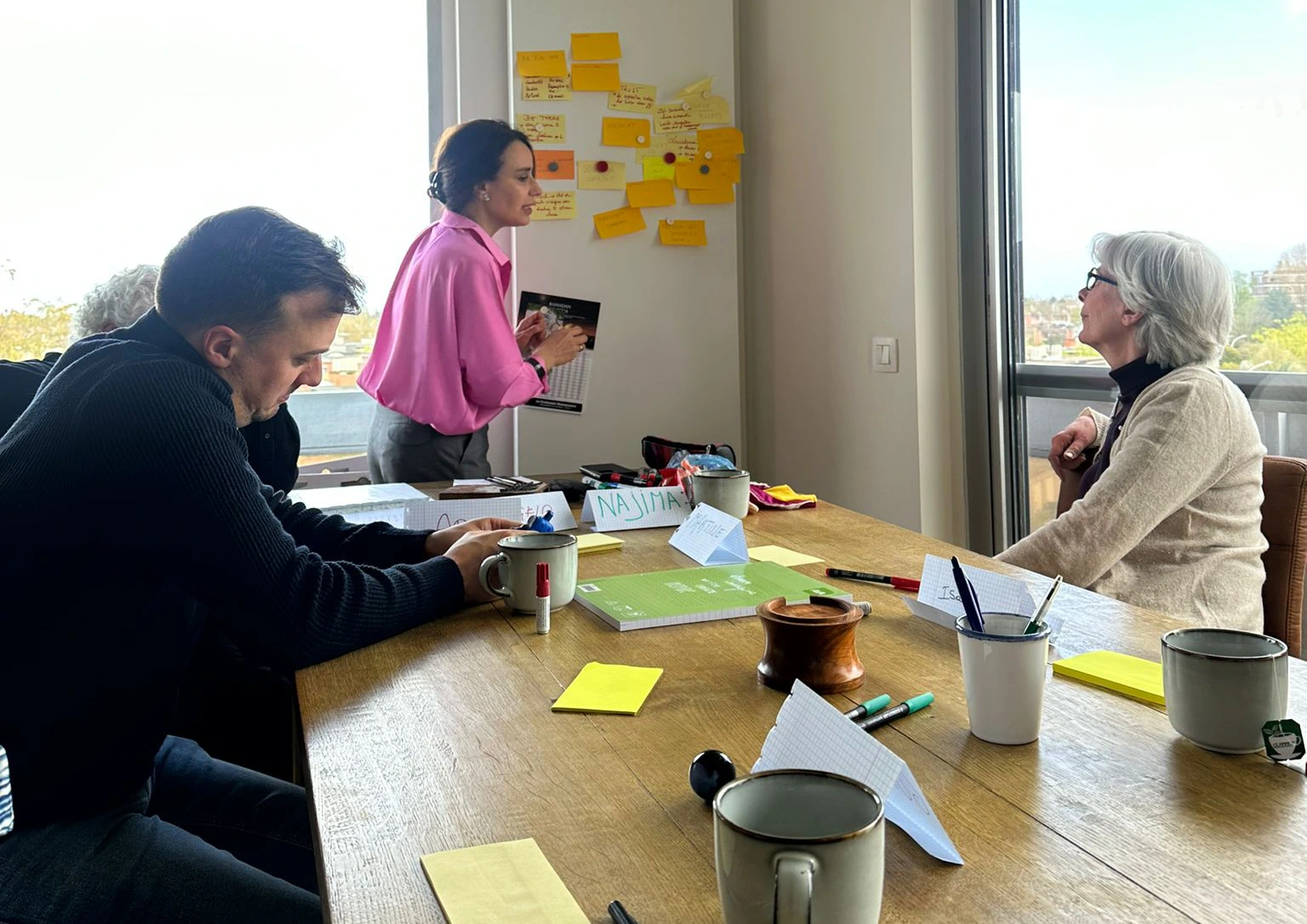
Slowing down does not always cost time. Sometimes time is lost precisely because an organisation jumps to solutions before understanding which problem it is trying to solve.
Organisations like action. When a problem becomes visible, doing something quickly feels like the natural response. A team is not working well, so a team day is organised. Leaders get stuck, so the search begins for a leadership programme. HR data is fragmented, so attention turns to a new tool.
Action brings energy and creates a sense of movement. But moving is not automatically the same as moving forward.
We regularly see organisations launching many interventions, only to keep coming up against similar problems. That does not necessarily mean those interventions were poor. Sometimes they were carried out exceptionally well. They simply turned out to answer a question that, in hindsight, was not the most important one.
That is why slowing down at the right moment can be particularly efficient.
Slowing down need not mean months of analysis. It can begin with a few simple questions. What exactly is happening? Since when? Who actually sees this as a problem? When does it occur, and when does it not? What solution has been tried before, and what happened afterwards? And above all: what change do we ultimately want to see in day-to-day work?
Questions like these often reveal something different from the way the problem was originally framed.
A conflict may, for example, appear to be about communication, when in fact two people have been given different mandates. A request for leadership development may be linked to a senior management team that is not setting clear enough priorities itself. A training request may ultimately turn out to be mainly about implementation. And behind a request for new technology, there may be a process that first needs to be simplified.
When an organisation jumps straight to a solution, it may be working very efficiently on the wrong problem. In the end, that often costs far more time than a brief pause at the outset.
At the same time, this is not an argument for endless analysis. Continuing to investigate can also become a way of putting off difficult choices. An organisation does not need to understand every detail before it acts.
The skill lies in slowing down enough to make the question sufficiently clear, then being able to move faster because energy is no longer spread across interventions with little connection to one another.
For us, good advice therefore often starts not with the most obvious solution, but with understanding what is really happening and identifying where action can make the greatest difference.
That small difference often determines whether an organisation mainly generates activity or genuinely moves forward.